Cart
0
Quick Answer
Yes, white vinegar is a good cleaner for many jobs around the home. Its acetic acid breaks down limescale, soap scum, and grease. It works best on glass, counters, and toilets. Skip it on natural stone, waxed wood, and rubber seals, since the acid can damage them over time.
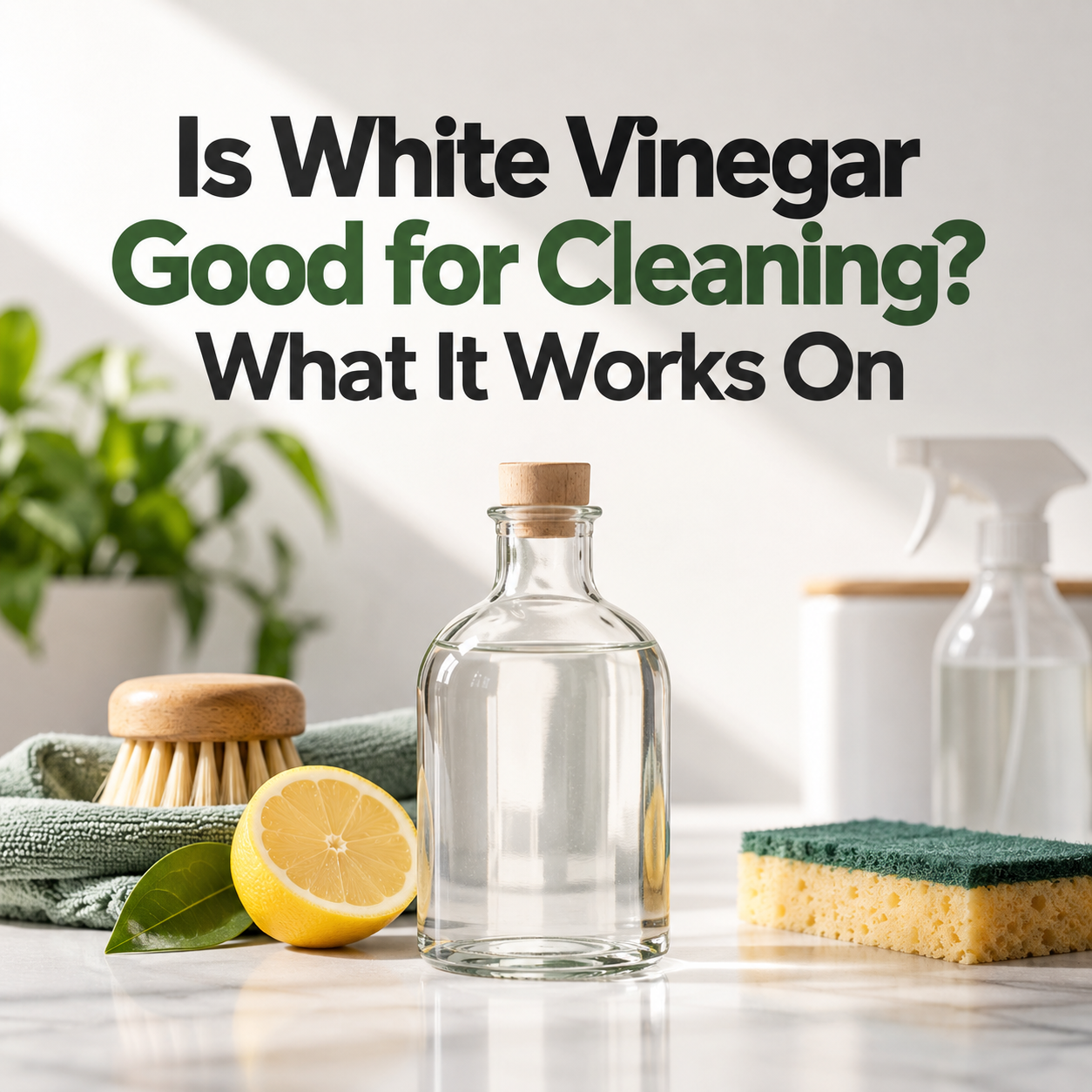
Is White Vinegar Good for Cleaning?
Yes, white vinegar is good for cleaning many things in your home. White distilled vinegar is about 5% acetic acid and 95% water. Acetic acid is a mild acid.
This acid is what does the work. It breaks down mineral buildup, cuts through grease, and slows down some germs.
Vinegar also has no harsh fumes. That makes it easier on your lungs than bleach or ammonia.
But vinegar is not right for every surface. Some materials cannot handle the acid. We will cover both sides below.
Which Vinegar Should You Use for Cleaning?
Use white distilled vinegar for cleaning. It is the most common type sold in stores, and it works on the widest range of surfaces.
Some brands sell a stronger product called "cleaning vinegar." Cleaning vinegar has about 6% to 8% acetic acid, a bit more than regular white vinegar. It is not safe to eat or cook with.
Malt vinegar and white wine vinegar can clean too. But their darker color can stain light-colored surfaces like grout or countertops.
Here is how the main types compare:
-
Distilled white vinegar (5%): the best all-round choice for home cleaning
-
Cleaning vinegar (6% to 8%): stronger, good for tough jobs, not for cooking
-
Malt or white wine vinegar: works, but can stain light surfaces
What Does White Vinegar Clean Well?
White vinegar cleans a wide range of things around your home. Here is what it handles well, grouped by room.
In the kitchen:
-
Counters and sinks
-
Inside ovens (cuts grease)
-
Kettles and coffee machines (removes limescale)
-
Dishes and glassware (cuts through grease film)
In the laundry room:
-
Removes musty smells when added to a wash cycle
-
Helps rinse out soap residue
Around the house:
-
Freshens up smelly rooms
-
Cuts through soap scum in the bathroom
Does White Vinegar Clean Windows and Glass?
Yes, white vinegar cleans windows and glass well. Mix equal parts vinegar and water in a spray bottle.
Spray it on, then wipe with a soft cloth or paper towel. Vinegar evaporates fast and leaves no streaks or residue behind.
This is one of the most reliable uses for vinegar in the whole house.
Is White Vinegar Safe for Floors and Carpets?
It depends on the floor. Some floors handle vinegar well. Others do not.
-
Sealed tile, vinyl, or laminate: safe. Mix 1 cup of vinegar per gallon of warm water.
-
Unsealed hardwood or cork: avoid it. The acid can soak in and cause discoloration.
-
Waxed or polished floors: avoid it. The acid strips the wax and leaves a dull, hazy look.
-
Carpet: test a hidden spot first. Some dyes and natural fibers can react with the acid.
Does White Vinegar Remove Stains and Rust?
Yes for some stains, no for others. Vinegar removes mineral stains, rust, and coffee or tea marks well.
For rust on metal tools or hardware, soak the item in vinegar for a few hours. Then scrub with a brush.
For protein-based stains like blood or egg, start with a cold water soak first. Cold water keeps the stain from setting into the fabric. Add a splash of vinegar to that cold soak for extra cleaning power.
Can You Clean Toilets and Bathrooms With White Vinegar?
Yes, white vinegar cleans toilets and most bathroom surfaces. Pour a cup into the toilet bowl, let it sit for 30 minutes, then scrub and flush.
For the tub and shower tile, use a 1:1 vinegar and water spray. Wipe it off after a few minutes.
Be careful with grout. Repeated use of vinegar can wear down grout over time. Use it sparingly there, and always rinse well afterward.
What Should You Never Clean With White Vinegar?
Some surfaces cannot handle the acid in vinegar. Avoid using it on these:
Surfaces to skip:
-
Natural stone (marble, granite, limestone): the acid etches and dulls the surface
-
Waxed or oiled wood: strips the finish
-
Rubber seals and hoses (washing machines, dishwashers): the acid breaks rubber down over time
-
Aluminum: repeated contact can cause pitting or discoloration
-
Electronic screens: the acid can damage anti-glare coatings
One safety rule matters most: never mix vinegar with bleach. The combination creates toxic chlorine gas, which is dangerous to breathe.
How Do You Mix White Vinegar for Cleaning?
The right mix depends on the job. Here are the ratios to use:
|
Job |
Ratio |
|
General cleaning (counters, floors) |
1 part vinegar, 1 part water |
|
Glass and mirrors |
1 part vinegar, 1 part water |
|
Descaling kettles and coffee machines |
Full-strength vinegar, then rinse well |
|
Heavy limescale |
Full-strength vinegar, let sit 15 to 30 minutes |
FAQs
Is white vinegar a disinfectant?
White vinegar can kill some germs, like E. coli and salmonella. It is not strong enough to kill all viruses on its own. Use a stronger disinfectant for serious sanitizing jobs.
What is white vinegar good for besides cleaning?
White vinegar is also used in cooking, pickling, and as a natural weed killer outdoors when used undiluted.
Can you use white wine vinegar to clean?
Yes, but its color can stain light surfaces like grout or countertops. Distilled white vinegar is the safer choice for most jobs.
Does white vinegar remove stains?
Yes, for mineral stains, rust, and coffee or tea marks. It works less well on protein-based stains like blood or egg without a cold water soak first.
Can white vinegar damage carpet?
It can, on some dyes and natural fibers. Always test a hidden spot before treating the whole carpet.
What's the right vinegar-to-water ratio for cleaning?
Use equal parts vinegar and water for most jobs. Use it undiluted only for tough limescale or descaling.
The Bottom Line
White vinegar is a simple, low-cost way to clean most of your home. Its acid cuts through limescale, grease, and soap scum without harsh fumes. Just remember to skip it on stone, wax, and rubber, and always keep it away from bleach.
A good bottle of pure white vinegar makes this easy. At Himalayan Salt Direct, we supply 100% distilled white vinegar made for exactly the jobs covered in this guide, from streak-free windows to a fresh-smelling kitchen.
If hard water and limescale are a regular problem in your home, vinegar is a great quick fix. But for a long-term solution, it's worth pairing it with the right water softener salt to stop limescale from building up in the first place.