Cart
0
What Makes Himalayan Salt Pink?
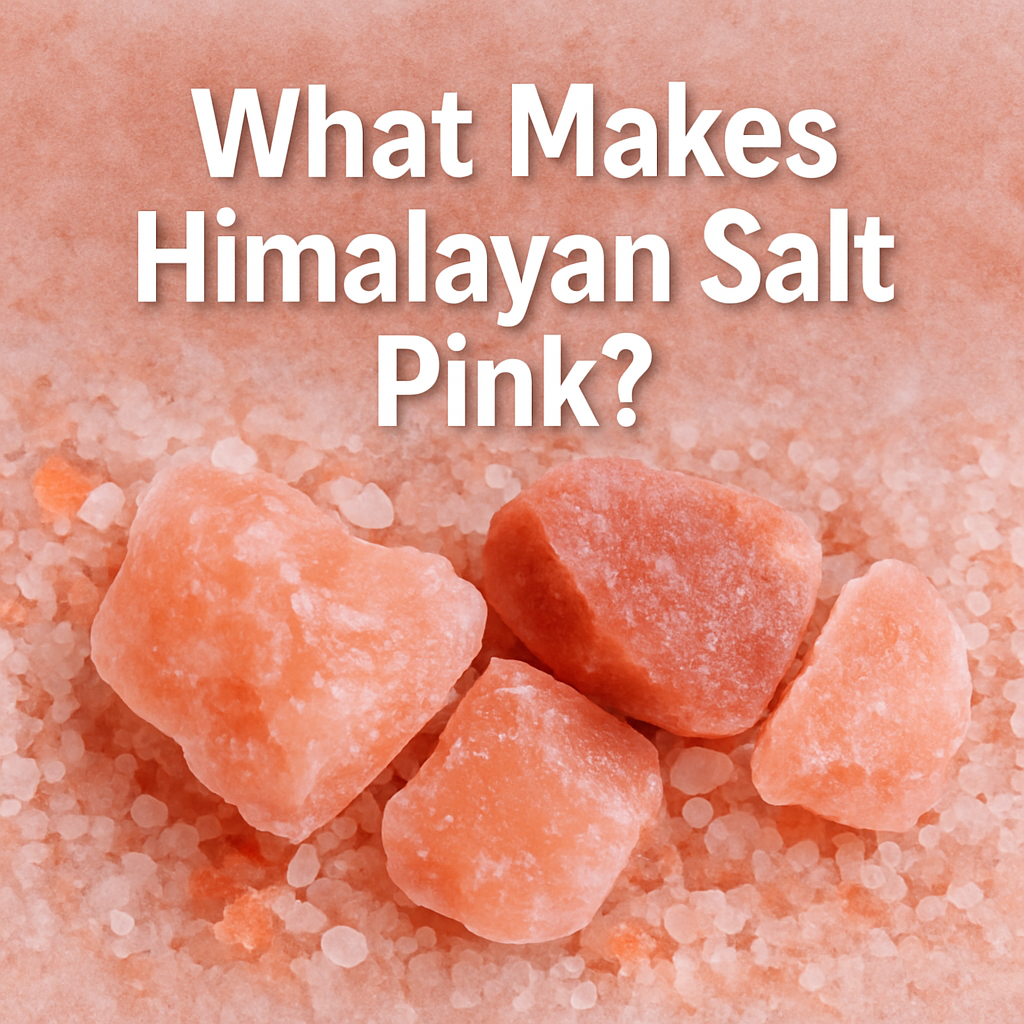
Himalayan salt gets its pink color from iron oxide and other trace minerals found in its natural form. When ancient seawater evaporated millions of years ago in the region now known as northern Pakistan, iron became trapped in salt layers. Over time, this iron reacted with oxygen and formed reddish compounds inside the salt crystals.
Read More: What Is Himalayan Salt and What Are Its Benefits?
The higher the iron content, the deeper the color. Some salt layers look pale pink, while others appear deep rose or red. Each shade reflects a different mineral balance that formed naturally inside the Earth.
What Minerals Make Himalayan Salt Pink?
The main reason for the pink color is iron oxide (Fe₂O₃). However, other trace minerals influence its tone and texture, including:
-
Magnesium adds a light tint and smooth texture.
-
Potassium brightens the soft pink tone.
-
Calcium and zinc create subtle peach or coral hues.
These minerals are locked inside the salt crystal, not added later. That is why genuine Himalayan salt always looks slightly uneven in color instead of perfectly uniform.
How Does Iron Oxide Change the Color of Salt?
Iron oxide forms when iron combines with oxygen underground. This reaction gives the salt its natural red and pink shades. The iron oxide in Himalayan salt is stable, does not rust, and does not change over time because it is part of the salt structure.
Even tiny traces of iron oxide can turn clear salt pink. This is why only a small amount of mineral content is enough to create the distinctive color that Himalayan salt is known for.
What Is the Chemical Composition of Himalayan Salt?
Himalayan salt is made up of 97 to 98 percent sodium chloride, with the remaining portion containing over 80 trace minerals. The most significant are:
-
Iron oxide – gives the pink color.
-
Magnesium – helps balance electrolytes.
-
Potassium – supports hydration.
-
Calcium and zinc – improve mineral profile and texture.
This mix of minerals is what makes Himalayan rock salt composition more natural compared to refined white table salt, which usually contains only sodium chloride and anti-caking additives.
How Do the Minerals Affect the Taste and Texture?
The mineral blend in Himalayan salt gives it a milder flavor and a smoother finish. It dissolves slowly, allowing the saltiness to develop gradually instead of all at once.
Because of the natural minerals, the salt holds a small amount of moisture and feels slightly heavier and less dry than refined salt. This makes it ideal for cooking, curing, and seasoning food in a balanced way.
Why Is the Pink Color of Himalayan Salt Natural?
The pink color is a natural result of how the salt formed. It appears as iron and minerals oxidize deep underground during the crystallization process. The salt is hand-mined, cleaned, and crushed, but not treated with artificial dyes or chemicals.
If salt looks extremely bright or evenly colored, it may have been artificially processed. Authentic Himalayan salt has gentle, natural tones that vary from crystal to crystal.
Does the Color Show the Quality or Purity of the Salt?
Yes. The shade of pink can show how much iron and mineral content is present.
-
Light pink means lower iron and a softer taste.
-
Medium rose means balanced minerals and pure composition.
-
Deep red or orange means higher iron levels.
Genuine Himalayan salt has mixed shades because it comes directly from different natural layers of the Khewra mine. The variation is a sign of authenticity.
What Does the Color Reveal About Its Chemistry?
The pink color shows that Himalayan salt is not made of a single compound. It is a mixture of sodium chloride with trace minerals that formed through natural oxidation. Iron oxide gives the red tones, while magnesium and calcium lighten them.
The denser crystal structure also means the salt breaks cleanly and grinds smoothly. The even distribution of minerals inside each crystal makes it more stable and naturally preserved.
When Did the Pink Color Form in History?
The pink hue developed around 250 million years ago when ancient seas dried up and left salt beds under layers of rock. Heat and pressure trapped iron and minerals within those layers. Over time, oxygen exposure caused oxidation, giving the salt its permanent pink tone.
This happened long before human activity, which is why Himalayan salt is often described as pure and untouched by modern pollution.
How Does the Color Connect to Its Nutritional Value?
The pink color indicates the presence of trace minerals that add small nutritional value. Himalayan salt still contains mostly sodium chloride, which helps maintain nerve signals and fluid balance in the body.
The extra minerals, such as iron, potassium, and magnesium, appear only in trace amounts. They add a balanced mineral touch to your diet but do not replace other sources of nutrition. The color mainly reflects natural purity, not extra health benefits.
Conclusion
Himalayan salt is pink because of iron oxide and other trace minerals that formed inside ancient salt deposits millions of years ago. The color is natural, permanent, and a direct sign of its mineral-rich composition.
Its gentle pink tones reveal how the Earth’s chemistry preserved this salt through time, creating a unique balance of sodium and minerals.
For pure and authentic Himalayan pink salt directly from Pakistan’s Khewra mines, choose Himalayan Salt Direct. Every grain is naturally colored, mineral-rich, and untouched by additives.
Shop genuine Himalayan pink salt today and bring natural purity to your kitchen.
FAQs
1. Is there a difference between light pink and dark pink salt when cooking?
Most colours work the same in food, but the deeper shades may carry a slightly stronger mineral note because of their higher iron content. The flavour change is subtle, yet some cooks prefer choosing the shade based on how they want a dish to taste and look.
2. How can you tell if pink Himalayan salt is real or dyed?
Real Himalayan salt has soft, uneven colour variations and irregular crystal shapes. Dyed salt looks overly bright, perfectly even in colour, and too smooth or uniform when you pour it out.
3. Does Himalayan salt have any benefits compared to regular table salt?
Both salts provide sodium, but people choose Himalayan salt for its natural mineral mix and the way it dissolves more gently in food. It doesn’t replace other nutrients, but it can add a cleaner, more balanced taste depending on how you cook.
4. Is Himalayan pink salt safe to use every day?
Yes, it can be used daily just like regular salt, as long as you keep your overall sodium intake balanced. The trace minerals don’t change your daily limits, so it really comes down to how salty you like your meals and how often you use it.