Cart
0
Quick Answer
Hard water contains higher levels of dissolved calcium and magnesium. Common signs include limescale, poor soap lather, dry-feeling skin, stiff laundry, cloudy glass, blocked shower parts, and scale inside appliances.
Around 60% of the UK is estimated to have hard or very hard water. The exact level depends on your local water supply and geology.
What is hard water?
Hard water is water that contains higher levels of calcium and magnesium. These minerals enter water as it moves through rocks such as chalk and limestone.
The Drinking Water Inspectorate, or DWI, measures water hardness using milligrams of calcium carbonate per litre. Its scale ranges from soft to very hard water.
Here is the DWI scale:
-
Soft: up to 100 mg/L
-
Slightly hard: 100 to 150 mg/L
-
Moderately hard: 150 to 200 mg/L
-
Hard: 200 to 300 mg/L
-
Very hard: above 300 mg/L
Around 60% of the UK is estimated to have hard or very hard water. Hard water is especially common across parts of southern and eastern England.
Summary: Hard water is mainly a mineral problem, not a water safety problem.
1. Does limescale keep coming back after cleaning?
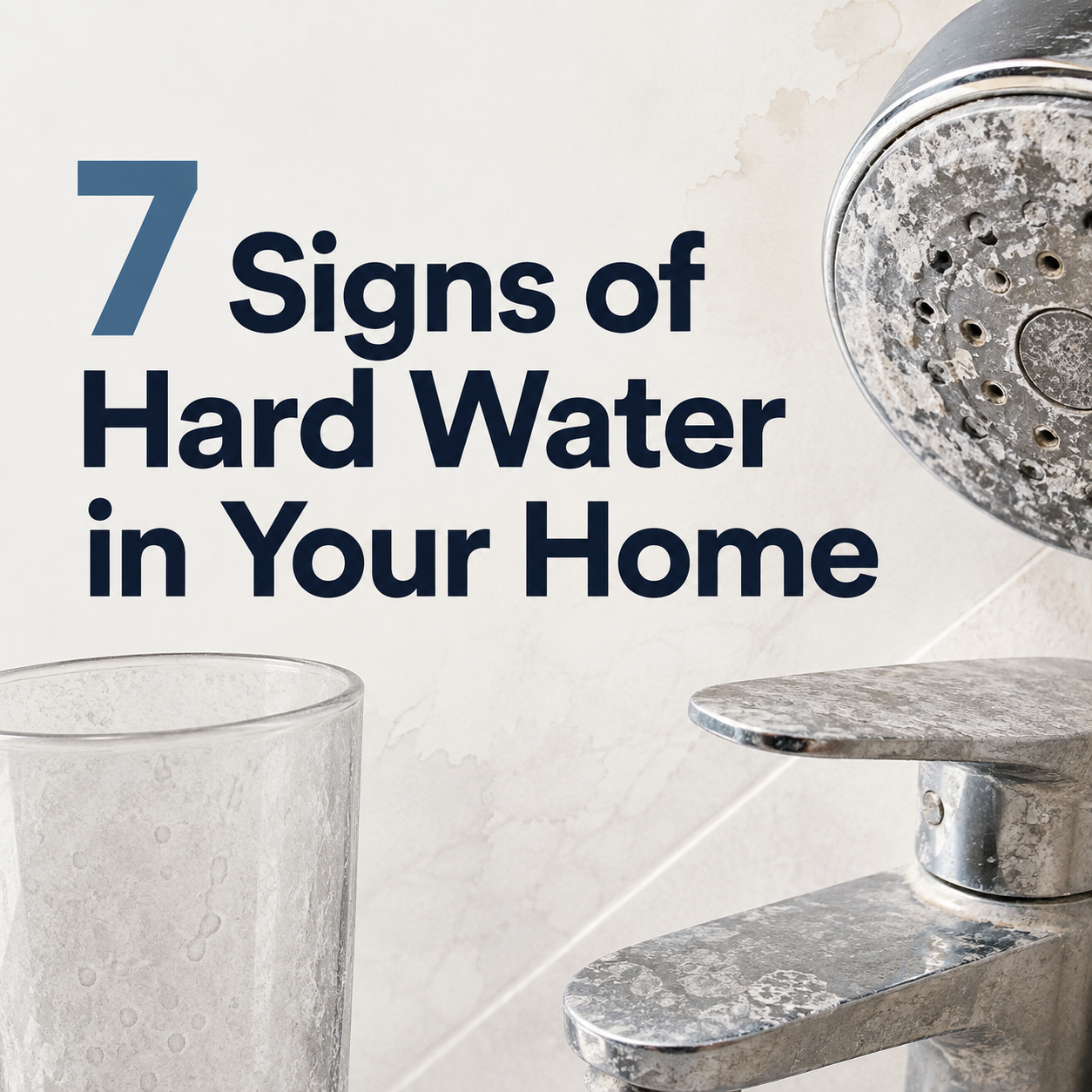
Yes, repeated limescale is one of the clearest signs of hard water. White, chalky deposits often appear around taps, kettles, shower heads, sinks, and other areas where water dries.
Limescale forms when calcium and magnesium deposits build up. Heating water makes scaling more noticeable, which is why kettles and hot water systems often show it first.
You may notice:
-
White marks around taps
-
Chalky deposits inside your kettle
-
Scale around shower heads
-
White marks on sinks and baths
-
More frequent cleaning of bathroom surfaces
A kettle that keeps needing descaling can be a useful warning sign. However, the best way to confirm hard water is to check your local water hardness.
2. Does soap or shampoo refuse to lather?
Hard water can make soap and cleaning products lather less easily. Calcium and magnesium in hard water react with soap, which reduces the amount of lather you get.
You may notice this when washing your hands, showering, or cleaning dishes. You may also feel like you need more product to get the same result.
The DWI notes that hard water produces less lather from soap, washing-up liquid, and washing powders.
You can also look for soap scum around your bath or shower. A white or cloudy film can be another clue.
3. Does your skin feel tight after a shower?
Hard water can leave some people with skin that feels dry or tight. Mineral deposits can mix with soap and leave residue on the skin.
This does not mean hard water is harmful to your health. The DWI says water hardness is not treated as a drinking water safety standard in UK regulations.
Skin can react differently from person to person. Hard water may be one possible reason for discomfort, but it is not the only cause.
Hair can also feel rough or dull after washing. Shampoo, minerals, and other products can leave buildup on the hair.
4. Does your laundry feel stiff after washing?
Stiff towels and rough clothes can be another sign of hard water. Hard water can affect how detergents work during a wash.
You may notice that towels do not feel as soft after washing. White clothes may also show more visible residue when mineral deposits remain after washing.
The DWI confirms that hard water produces less lather from washing powders. This can affect how laundry products perform in your washing machine.
You may also find yourself using more detergent than expected. However, always follow the detergent maker's instructions for your local water hardness.
5. Do your glasses and dishes have white spots?
White spots or cloudy marks on glassware can point to hard water. Minerals can remain behind when water dries on the surface.
You may see these marks on:
-
Drinking glasses
-
Plates
-
Cutlery
-
Shower screens
-
Dishwasher parts
Rinsing and drying glassware by hand may remove the marks for a while. They can return when the same hard water dries on the surface again.
Regular cleaning can remove existing deposits. It does not remove the minerals from your water supply.
6. Are your shower heads or taps getting blocked?
Limescale can build up around small openings in shower heads and taps. The deposits can make the openings smaller and affect the flow of water.
The problem may be easy to miss at first. You might simply notice that certain spray holes are blocked or that water flows unevenly.
Hard water is also known to cause scaling in hot water systems and household appliances.
Do not assume every drop in water pressure comes from hard water. A plumbing problem, blocked filter, faulty valve, or supply issue can cause similar symptoms.
7. Are your appliances building up scale?
Hard water can cause scale inside appliances that heat or use water. Kettles are easy to see, but the same mineral deposits can affect other equipment.
Common examples include:
-
Kettles
-
Boilers
-
Washing machines
-
Dishwashers
-
Coffee machines
-
Hot water systems
The DWI says scaling can shorten the life of heating elements and make appliances less efficient.
This matters because scale inside an appliance is harder to see than scale on a tap. Regular cleaning can help remove deposits, but it does not change the hardness of your incoming water.
Is hard water safe to drink?
Yes, hard water is generally safe to drink in the UK. Calcium and magnesium are natural minerals found in drinking water.
The DWI says UK drinking water rules do not set a safety limit for water hardness, calcium, or magnesium. Hardness is mainly linked to scale and plumbing effects rather than water safety.
The main issue for most homes is what hard water leaves behind. That includes limescale on surfaces and inside appliances.
How can you check if your home has hard water?
Your water supplier can tell you how hard your local water is. The exact level can vary even within the same region.
Check your water supplier's website and search for its water hardness or postcode checker. You can then compare the result with the DWI hardness scale.
You can also look for several signs at home:
-
Check your kettle for white scale.
-
Look around taps for chalky marks.
-
Check whether soap lathers poorly.
-
Look for white spots on glassware.
-
Check whether towels feel unusually stiff.
-
Look inside shower heads for scale.
A postcode check is more reliable than judging hardness from one symptom alone.
What actually helps with hard water?
The best solution depends on whether you want to remove hardness or manage scale. Cleaning products can remove existing deposits, while a water softener treats the water itself.
Here are some common options:
-
Descaling: Removes existing limescale from kettles, taps, and appliances.
-
Regular cleaning: Helps stop scale from building up on surfaces.
-
Rinse aid and suitable detergents: Can help reduce visible residue on dishes and laundry.
-
Water softener: Reduces calcium and magnesium in the treated water.
-
Scale control products: May help manage scale, but they do not all remove water hardness.
A salt-based water softener uses ion exchange, a process that replaces calcium and magnesium ions with sodium ions. This is different from simply filtering water or cleaning limescale after it forms.
If you already own a water softener, keeping the salt tank filled is part of normal maintenance. Always use the salt type recommended for your specific softener.
Water softener salt is made for softening systems, while dishwasher salt is made for a dishwasher's built-in softening unit. Check your appliance manual before using any salt product.
Give Your Water Softener the Salt It Needs
If you recognise several signs of hard water, checking your local water hardness is a good first step. Once you know your water is hard, you can choose between managing limescale or treating the water with a suitable softener.
For homes with a water softener, good quality softener salt helps keep the system running as intended. Himalayan Salt Direct supplies water softener salt for UK homes, with options designed for different softener systems.
Choose the correct salt for your softener model and keep the salt level topped up as recommended by the manufacturer.