Cart
0
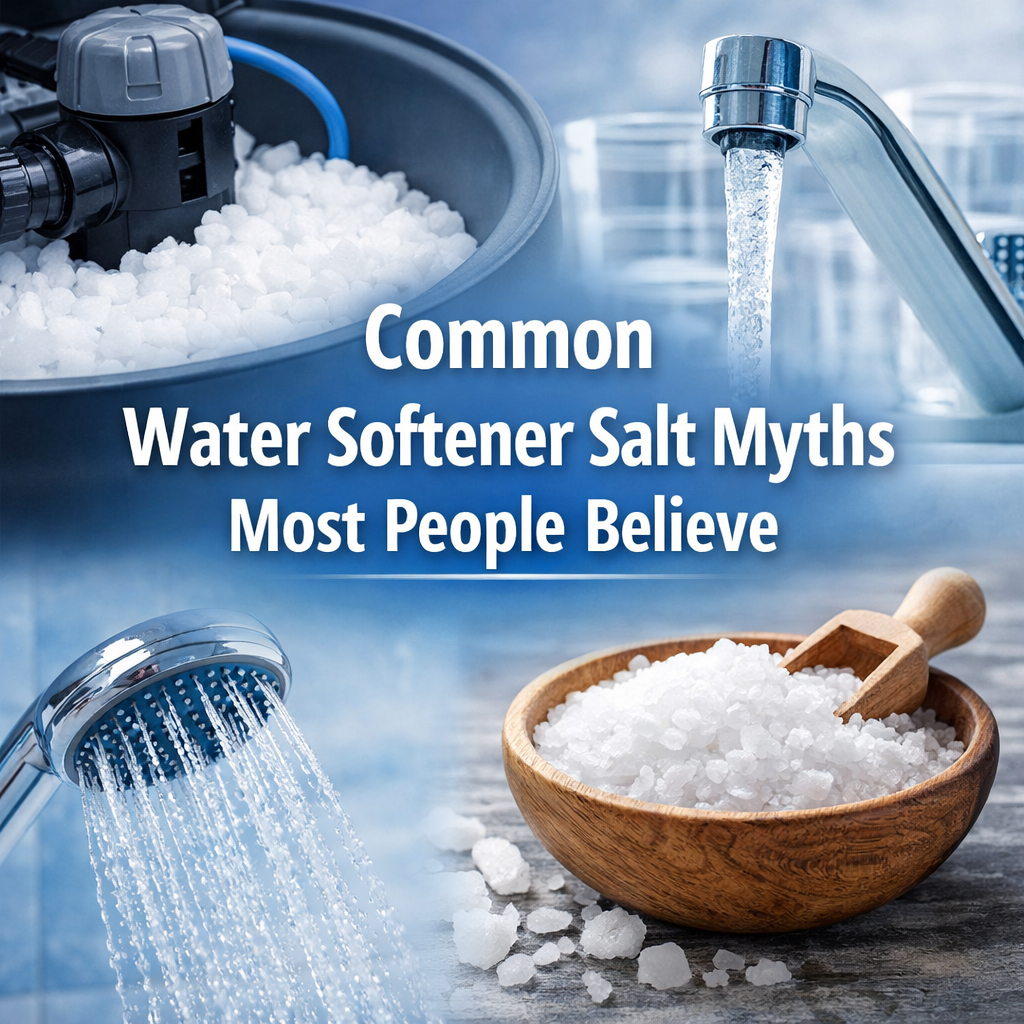
Water softener salt is one of those things people use without thinking much about it. You refill the tank, water feels fine, and life moves on. Then one day, glasses look cloudy, taps show white marks, or water starts feeling different. At that point, questions pop up fast. Is the salt right? Is the system working? Is softened water even safe?
Most confusion around water softener salt comes from half information passed around online or from old advice that no longer applies. Once those myths settle in, people either misuse their system or stop trusting it altogether.
This guide clears those myths in a simple way. By the end, you will know exactly how water softener salt works, how to use it correctly, and how to get consistent soft water without guesswork.
How water softener salt actually works in a system
Water softener salt helps clean the inside of a water softener system. Hard water carries calcium and magnesium minerals. These minerals cause scale buildup inside pipes, heaters, appliances, and fittings.
Inside the softener, resin beads trap these minerals as water flows through. Over time, the beads fill up. Water softener salt dissolves into a brine solution that washes the beads during regeneration. This process removes trapped minerals and resets the system.
After regeneration, the salt water is flushed out. Only softened water flows into your home.
Does water softener salt make drinking water salty
Softened water does not taste salty when the system is working properly.
The salt stays in the brine tank and is removed during the rinse cycle. Only a very small amount of sodium remains in softened water. For most people, this amount is lower than sodium found in everyday food items.
If water tastes salty, it usually means the system settings are off, regeneration did not finish properly, or low quality salt is being used.
Are all water softener salts the same
Water softener salt quality plays a big role in how smoothly a system runs.
Low purity salt often contains dirt and insoluble particles. These particles settle at the bottom of the brine tank and slowly form sludge. Sludge interferes with regeneration and increases maintenance problems.
High purity water softener salt dissolves evenly and leaves very little residue. This keeps the brine tank cleaner, supports consistent regeneration, and helps the system last longer. The difference becomes clear in areas with hard or very hard water.
Does adding more salt improve soft water results
Adding extra salt does not make water softer.
Water softeners are programmed to use a fixed amount of salt during each regeneration cycle. Extra salt stays unused in the tank and increases the risk of salt bridging. Salt bridging happens when salt hardens above the water level and blocks the system from drawing brine.
Keeping the brine tank around half full gives steady results and avoids salt waste.
Can water softener salt damage pipes or appliances
Water softener salt does not damage plumbing.
Hard water causes scale buildup that narrows pipes, reduces water flow, and lowers heating efficiency. Scale also shortens the life of water heaters, washing machines, and dishwashers.
Softened water reduces scale buildup and helps appliances work more efficiently over time. Homes with properly maintained softeners often see fewer plumbing issues.
How softened water affects skin and hair
Softened water allows soap and shampoo to rinse clean.
Hard water leaves mineral residue on skin and hair. This residue causes dryness, dull hair, and soap buildup. Softened water removes that residue and makes bathing feel cleaner.
The salt used in the softener does not touch your skin. The difference people notice comes from the absence of hard water minerals.
Is water softener salt harmful to the environment
Modern water softener systems use salt more efficiently than older models.
Most new systems regenerate based on actual water usage instead of fixed schedules. This reduces salt consumption and wastewater discharge. High purity water softener salt also dissolves fully, leaving less residue behind.
Correct system sizing matters too. A properly sized softener runs fewer regeneration cycles and uses less salt overall.
How often water softener salt needs to be checked
Water softener salt does not need daily attention.
In most homes, checking the brine tank once a month is enough. Refill timing depends on water hardness, household size, and water use. Commercial systems may need more frequent checks due to higher demand.
When salt runs out, hard water returns quietly. Scale begins forming long before taste or feel changes are noticed.
Why water hardness can change without warning
Water hardness does not stay constant all year.
Municipal water sources change, groundwater levels shift, and seasonal factors affect mineral content. These changes often happen without notice.
Keeping the correct salt level allows the softener to adjust automatically and maintain consistent water quality.
Where water softener salt is used beyond homes
Water softener salt is widely used in hotels, restaurants, hospitals, laundries, and manufacturing facilities.
In these settings, scale buildup increases energy costs and causes equipment failure. Reliable salt quality supports smooth operation and reduces downtime.
Conclusion
Water softener salt plays a clear role in protecting your water system, appliances, and daily comfort. Most problems linked to softeners come from poor salt quality, incorrect usage, or outdated beliefs.
Using clean, high purity water softener salt and maintaining proper levels keeps water consistent and systems running smoothly. When the basics are done right, soft water becomes effortless.
Himalayan Salt Direct provides water softener salt designed for clean dissolution and steady regeneration. A simple change in salt quality can make your entire water system work better.
FAQs
Does water softener salt expire if stored for a long time?
Water softener salt does not expire when stored properly. Salt remains stable for years as long as it is kept dry and sealed. Problems only start when moisture enters the packaging, causing clumping or hardening. Storing salt bags off the floor and away from humidity keeps them usable for long periods.
What happens if you use low quality salt in a water softener?
Low quality water softener salt can leave insoluble residue in the brine tank. Over time, this residue turns into sludge that blocks valves and affects regeneration. This leads to uneven softening, higher salt usage, and more frequent service calls. Using high purity salt helps prevent these issues.
Can water softener salt affect water pressure in the house?
Water softener salt does not reduce water pressure. Low pressure is usually caused by scale buildup from hard water inside pipes. When a softener runs properly with the right salt, it actually helps maintain steady water flow by reducing mineral deposits over time.
Is water softener salt safe for homes with septic systems?
Water softener salt is generally safe for septic systems when used correctly. Modern softeners regenerate only when needed, limiting salt discharge. Keeping the system properly sized and avoiding overuse of salt helps prevent stress on septic tanks.
Why does my water feel slippery after installing a water softener?
Softened water feels slippery because soap rinses away fully without mineral interference. Hard water leaves residue that creates a rough feel. The slippery sensation is clean water interacting with skin, not salt left behind in the water.