
Cart
0
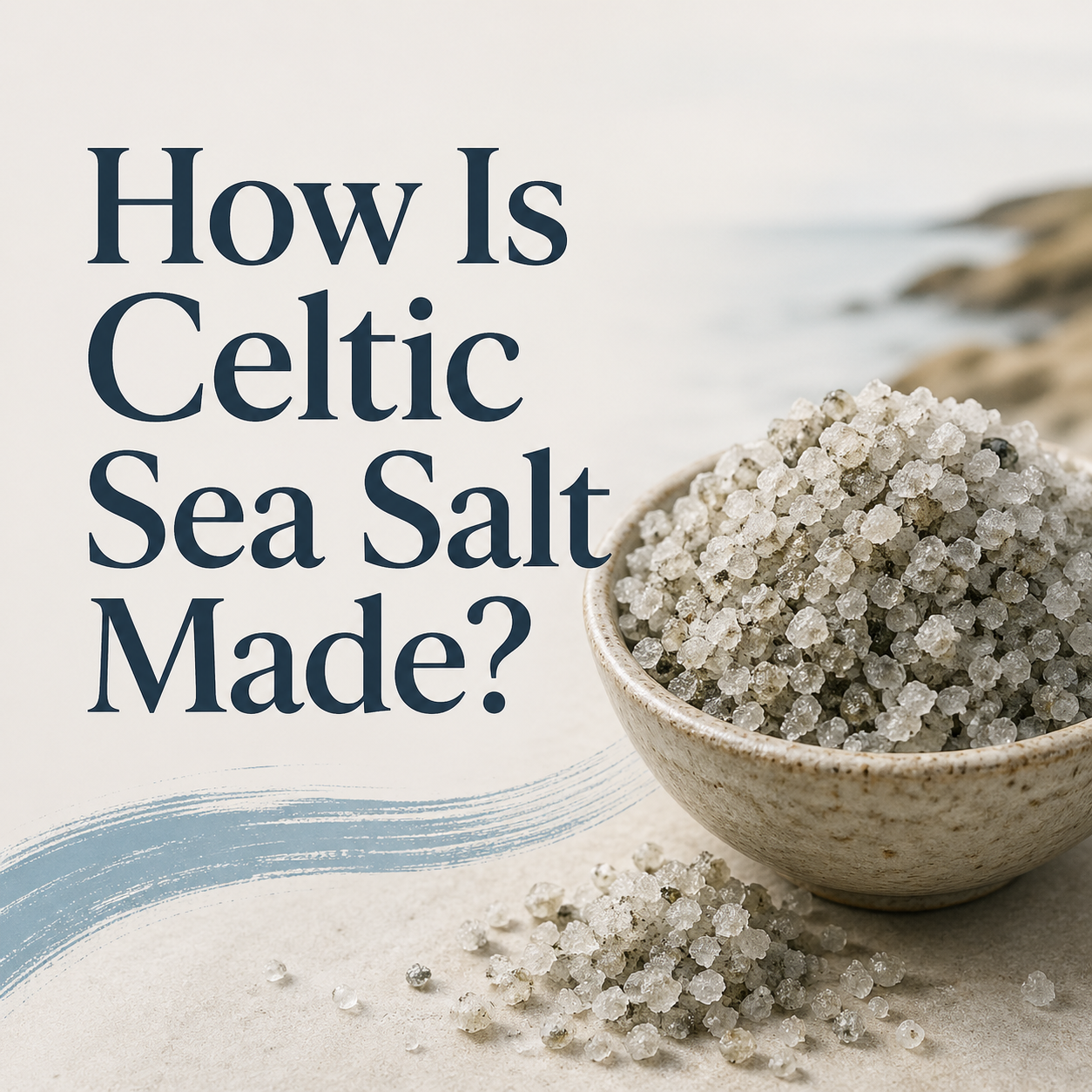
You’ve probably seen Celtic sea salt before. It looks a bit grey, feels slightly damp, and clumps together in a way regular salt never does. That alone makes people curious. Why does it look like that? And how is it actually made?
It all comes down to a slow, hands-on process that hasn’t changed much over time. No heavy refining, no chemical steps. Just seawater, sun, wind, and careful work.
Where Celtic Sea Salt Comes From
Celtic sea salt is made in coastal salt marshes in Brittany, France. These marshes are designed like a network of shallow ponds where seawater moves gradually from one level to another.
As the water travels, it starts to change. Each pond allows a bit of water to evaporate, so the salt becomes more concentrated step by step.
The base of these ponds is lined with natural clay. That clay is part of the reason Celtic salt looks the way it does. It adds trace minerals and gives the salt its soft grey color. Without it, the salt would look completely different.
The ocean here also plays its role. The tides keep bringing in fresh seawater, so the process keeps running naturally.
How Celtic Sea Salt Is Made
It starts when seawater enters the first pond. From there, it flows through smaller ponds, slowly losing water through evaporation. Sun and wind do all the work here, which is why this method is called solar evaporation sea salt production.
As the water level drops, the salt becomes more concentrated. Then something interesting happens. Salt crystals begin forming at the bottom of the clay ponds.
This stage depends heavily on weather. Warm, dry days speed things up. Humid or rainy days slow everything down. So timing matters a lot.
Once the crystals are ready, they are collected by hand. Workers use wooden tools to gently gather the salt. This keeps the texture just right and avoids mixing too much clay into it. Metal tools are not used because they can affect the salt’s natural quality.
Why Celtic Sea Salt Looks Grey and Feels Moist
That grey color is not random at all. It comes from the clay and the minerals in the seawater. As the salt forms, it absorbs small amounts of both.
The slightly damp feel also surprises people at first. That moisture is natural. The salt is not fully dried or refined, so it keeps some of the water along with its minerals.
If it ever hardens in your kitchen, that is normal. It just means the moisture level has changed a bit.
What Makes Celtic Sea Salt Different From Regular Salt
Regular table salt goes through heavy processing. It is cleaned, heated, and stripped of most of its natural minerals. Additives are often added to keep it free-flowing.
Celtic sea salt is very different. It stays close to its natural state. It keeps trace minerals like magnesium, calcium, and potassium.
This also changes how it tastes. It feels softer on the tongue and less sharp. Because of its texture, a small pinch can go a long way.
How Weather Shapes Every Batch
Celtic sea salt is closely tied to the weather. Sunlight and wind help water evaporate faster, while rain slows the process down.
That is why no two batches are exactly the same. Some may feel slightly drier, others a bit softer. These small differences come from natural conditions during harvesting.
How to Use Celtic Sea Salt in Everyday Cooking
Using Celtic sea salt is simple once you get used to its texture. It works well during cooking and also as a finishing touch.
In soups and sauces, it blends in easily. On grilled food, a small pinch on top adds a clean, balanced taste.
For baking, it helps to crush it slightly or dissolve it first so it spreads evenly. You can also mix a pinch into water with lemon for a quick hydration drink after a long day or workout.
How to Store It Without Ruining the Texture
Celtic sea salt needs a bit of care when storing. A closed container works best. This helps keep its natural moisture balanced.
If it dries out and becomes hard, you can break it gently with a spoon. Keeping it away from strong smells is also a good idea since salt can absorb odors.
Conclusion
Once you understand how Celtic sea salt is made, it starts to feel less like an everyday ingredient and more like something carefully shaped by nature and time.
If you want salt that feels natural in your food and simple to use in your kitchen, this is a great place to start. Take a look at Himalayan Salt Direct and pick a salt that actually feels right from the first pinch.
FAQs
How long does it take to make Celtic sea salt?
Celtic sea salt usually takes several days to a few weeks to form. The exact time depends on weather conditions like sun, wind, and humidity. Warm and dry weather speeds up evaporation, while rain can delay the process.
Is Celtic sea salt washed after harvesting?
No, Celtic sea salt is not heavily washed after harvesting. It is kept close to its natural state so it retains its minerals and moisture. Washing it too much would remove the elements that give it its grey color and texture.
Why does Celtic sea salt feel sticky or clumpy?
Celtic sea salt feels slightly sticky because it holds natural moisture. This moisture helps keep trace minerals intact. Clumping is normal and shows that the salt has not been dried or treated with anti-caking agents.
Can Celtic sea salt expire or go bad?
Celtic sea salt does not expire in the usual sense because it is a natural mineral. However, it can change texture if exposed to air or moisture. Storing it properly in a sealed container helps keep it in good condition.