
Cart
0
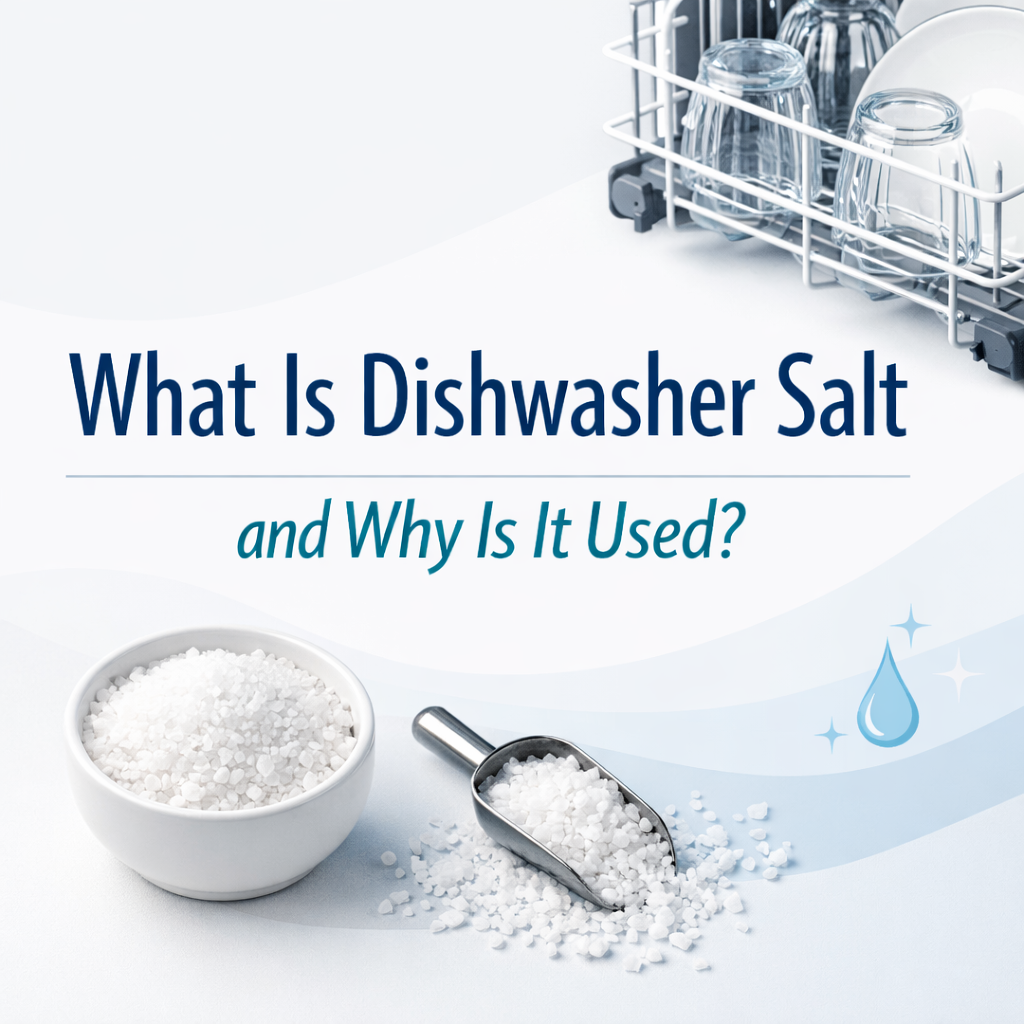
You run your dishwasher expecting clean, shiny dishes. Instead, your glasses look cloudy, plates feel a bit rough, and there are white marks that just won’t go away. It’s frustrating, especially when you’re already using a good detergent.
In most cases, the real issue is hard water. That’s where dishwasher salt comes in. Once you understand how it works, it becomes one of those small things that quietly fixes a big problem.
What makes dishwasher salt different from normal salt?
At first glance, dishwasher salt looks like regular salt. The difference is in how it’s made. Dishwasher salt is pure sodium chloride with large, coarse grains. It doesn’t have iodine or anti-caking agents like table salt.
That matters because your dishwasher is sensitive to what goes inside it. Table salt dissolves too quickly and can leave residue behind. Over time, that can affect how the machine runs.
Dishwasher salt dissolves at the right pace and works smoothly with the machine’s built-in softener. If you’ve ever thought about using kitchen salt as a shortcut, it usually leads to more problems than it solves.
Why dishwasher salt is used in dishwashers
Water in many homes contains minerals like calcium and magnesium. This is called hard water. When this water heats up during a wash cycle, those minerals stick to dishes and surfaces.
That’s why glasses start looking foggy and plates don’t feel as smooth as they should. The same minerals also build up inside the dishwasher, which can affect performance over time.
Dishwasher salt helps deal with those minerals. It softens the water so your dishwasher can clean properly.
How dishwasher salt works inside your machine
Inside your dishwasher, there’s a small unit called a water softener. It contains resin beads that catch the minerals from hard water.
As the machine runs, those beads slowly fill up. When they’re full, they stop working. Dishwasher salt helps clean them so they can start fresh again.
Here’s how it flows:
-
Hard water enters the dishwasher
-
Resin beads grab calcium and magnesium
-
The beads fill up over time
-
Salt solution washes those minerals away
-
The beads reset and keep softening water
It’s a simple cycle, but it makes a big difference in how your dishwasher performs.
What changes you’ll notice after using dishwasher salt
This is the part most people care about. Once you start using dishwasher salt regularly, the results feel different right away.
Your glasses come out clear instead of cloudy. Plates feel smooth when you touch them. Steel utensils look brighter. Even plastic containers don’t have that dull finish anymore.
You may also notice your detergent works better. In soft water, it spreads more evenly and rinses off cleanly. Some people even find they don’t need as much detergent as before.
Inside the dishwasher, there’s less buildup. That helps everything run the way it should.
When to refill dishwasher salt
Most dishwashers have a small light that turns on when the salt level is low. When you see it, it’s time to refill.
If your machine doesn’t have that feature, your dishes will tell you. Spots, dullness, or a rough feel usually mean the salt is running low.
How often you refill depends on your water and how often you use the dishwasher. For many households, topping it up every few weeks works well.
How to add dishwasher salt the right way
The salt compartment is at the bottom of the dishwasher, under the lower rack. Once you know where it is, refilling takes just a few minutes.
Open the cap, add a bit of water if it’s your first time, then pour in the salt until it’s full. Close the cap tightly.
It helps to run a wash cycle right after. That clears away any salt that may have spilled and keeps the inside clean.
Does dishwasher salt replace detergent or rinse aid?
It’s easy to mix these up, but each one has its own job. Dishwasher salt softens the water. Detergent handles grease and food. Rinse aid helps water slide off dishes so they dry without marks.
If you skip salt in hard water, even a strong detergent won’t give you the same results. That’s why many people still use salt even with all-in-one tablets.
Final thoughts
Dishwasher salt is one of those small details that changes your results in a big way. Once the water is softened, everything starts working properly. Your dishes look better, your machine stays cleaner, and the whole process feels easier.
If you’re tired of dealing with spots or cloudy glassware, this is a simple fix worth trying. For reliable results every time, use Himalayan Salt Direct dishwasher salt and enjoy the difference from your very next wash.
FAQs
What happens if I run my dishwasher without salt for a long time?
Running a dishwasher without salt in a hard water area leads to mineral buildup inside the machine. Over time, this can reduce cleaning performance, leave permanent marks on glassware, and affect heating parts. The damage builds slowly, so results may look fine at first but get worse with time.
Can dishwasher salt improve drying results?
Yes, indirectly. Dishwasher salt softens the water, which helps rinse aid work better. When water is soft, it slides off dishes more easily instead of forming droplets. This reduces water spots and helps dishes dry cleaner and clearer.
Is dishwasher salt safe for all types of dishwashers?
Dishwasher salt is safe for machines that have a built-in salt compartment. Most modern dishwashers include this feature. If your machine does not have a salt reservoir, then it is not designed to use dishwasher salt and you should skip it.
Can too much dishwasher salt damage the dishwasher?
Overfilling the salt compartment or spilling salt inside the machine can cause corrosion if not cleaned. The salt itself is not harmful when used correctly, but any loose salt should be rinsed away by running a cycle after refilling.
Does dishwasher salt affect water taste or kitchen supply?
No, dishwasher salt only works inside the dishwasher’s internal softener unit. It does not mix with your home’s water supply or affect drinking water. Its role is limited to improving the wash cycle inside the machine.